Tuesday, June 30, 2015

Ida H. Hyde

Ida H. Hyde, Headstone, Woods Hole, MA, 2015


We had time to kill in Woods Hole waiting for the ferry over to Martha's Vineyard, so we decided to wander around the cemetery there.  There were a lot of interesting grave markers, some with lengthy and very descriptive epitaphs, but it was this erratic boulder with a plaque affixed to it that really caught my attention and made me wonder:  Who was Ida H. Hyde?  It turns out that she was an astonishing woman of uncommon perserverance.  Her singular focus to study nature and biology weathered her through a lot of hardships, not the least of which was the nearly insurmountable gender bias she encountered at university.  In the end, her work and dedication spoke for itself.
I'm so glad that I came across her final resting place, and learned more about this extraordinary scientist.

Saturday, June 20, 2015

Nine, Ten days

Seneca Zombie Formalism, 2013, Romulus, NY

One last parting shot.  I will return to the blog in nine, ten days.

Friday, June 19, 2015

Vacation: All I Ever Wanted

C & B on the Beach, Prime Hook, DE, 2014


Well, tomorrow we leave on vacation.  A week on Martha's Vineyard.  For the first time since we went to Italy in 2006, the dog will not be joining us.  No, we're taking both of our mothers instead - and there isn't enough room to take the dog, not with all of the baggage, both literal and figurative, that the old ladies bring. 
I hope all goes well, but I'm packing plenty of wine in case I have to start afternoon drinking.

Thursday, June 18, 2015

Denyse Thomasos

Yves Bleu, Denyse Thomasos, 1999


I will never be accused of being on the cutting edge of the art world, being, as I am, always late to the party.  In the case of Denyse Thomasos, I did not learn of her and her astounding achievements in abstract art until three years after her sudden death.  Her architecture abstract paintings are ideal in form and representation.  I've never encountered anything quite like them.  They are as close to perfection as the world can be rendered in the abstract.  The above work, Yves Bleu, is very much what a city feels like in the rain.
Thomasos taught at Rutgers University, coming to America via Trinidad and Canada, but like all truly great artists, she belonged to the world.   

Wednesday, June 17, 2015

Liberty

The Face of Liberty, New York Harbor, 1885


One hundred and thirty years ago today, the Statue of Liberty arrived in pieces at New York Harbor.  Frederic Auguste Bartholdi's masterwork, situated as it is at the gateway to New York city, has served as the welcome to millions of immigrants who've made their way to our shores.
I've been to NYC, and to Liberty Island and the nearby former immigration processing center, Ellis Island.  My Italian ancestors passed through Ellis Island in 1913.  My grandmother was then five years old.  Coming to America in some ways overwhelmed her in such a way that she never fully recovered.

Monday, June 15, 2015

Barbie Furiosa 2.0

Barbie Furiosa, Non-Mechanical Arm Attached, Pittsburgh, 2015


Now that fireworks are available, I'm tinkering more with the Barbie as Furiosa concept.  And yes, this is all as much fun as it seems.  It's been so long since I've dismembered a Barbie.  Wow, talk about bringing back memories of my misspent youth!  

Friday, June 12, 2015

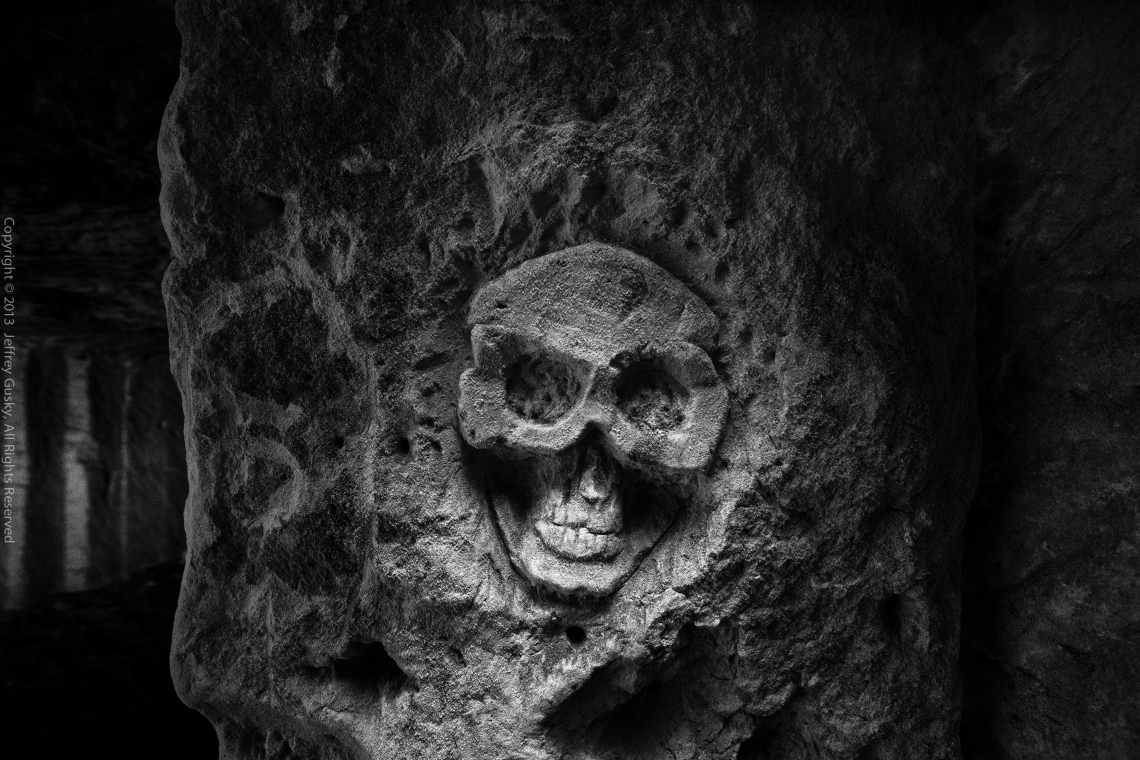
Jeff Gursky and The Hidden World of WWI

Jeff Gursky, The Hidden World of WWI


Growing up, and long into adulthood as well, it seemed apparent to me that much more attention was paid to WWII, the battles, the outcome, the lingering historical influences on the shape of global politics and machinations, than WWI.  Tragic, really, to so discount the precursor to WWII.  Now that it's been a hundred years since the war to end all wars began, it is being revisited in a more meaningful way, and I'm glad.  We have to remember and examine our history, lest we, and you know how this phrase ends, repeat it.
Doctor, artist, explorer (a self description per his website) Jeff Gursky  has rediscovered the "lost" tunnels of WWI in France and they remain much as how they were left a hundred years ago.  Like any space that harkens back to a time of conflict and massive loss of life, it's difficult to look at the photographs and not be overcome with a sense of wistful wishfulfillment that somehow we, as evolved creatures, are better than this.  I think that this is why we have a deep fondness for the ideal of time travel.  If only I could go back in time and save Lincoln, kill baby Hitler, stop the assassination of Archduke Ferdinand, throw a bucket of water on Joan of Arc...there are too many to list.  I know that I can't change the past, that we can only look upon it and learn, if only we'd learn.  Yes, if only we'd learn then maybe all of those deaths would mean something.  As it is, the most lasting thing that emerged from WWI was/is an ongoing collective existential crisis from which we cannot escape.